

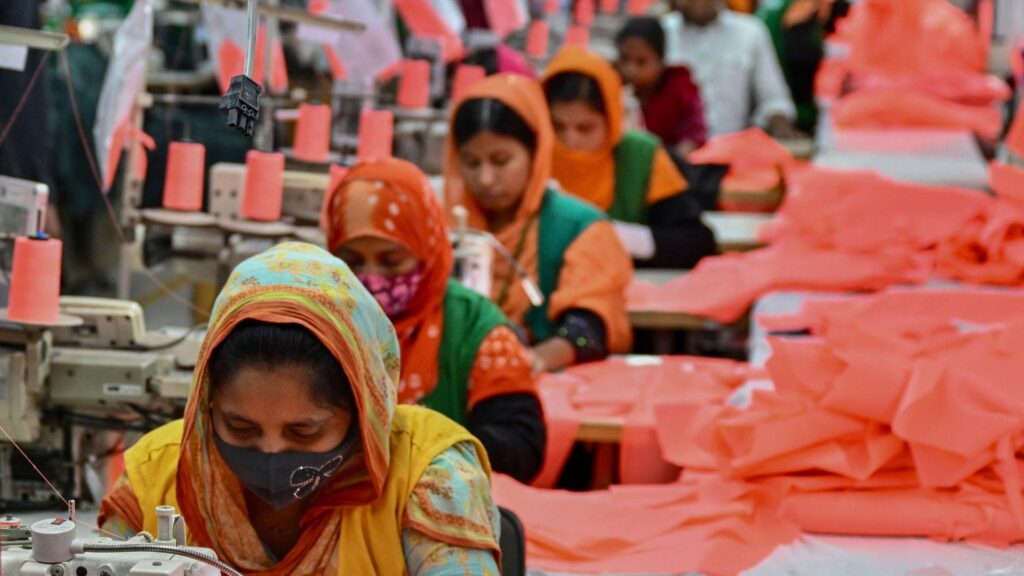
The Bangladesh textile industry opportunities and risks are becoming increasingly important as the global apparel market continues to evolve. What was once a cost-driven industry is now shifting toward value, speed, and innovation.
Today, global brands are not just looking for low-cost production; they are looking for reliable partners who can deliver consistent quality, faster lead times, and transparent processes.
As this transformation continues, Bangladesh stands at a critical point, balancing growing opportunities with emerging risks in the global textile landscape.
The Global Textile Industry Is Changing
The traditional model of apparel manufacturing focused heavily on large volumes and low costs. But today, global brands expect much more from their manufacturing partners.
Key changes shaping the industry include:
- Demand for faster lead times
- Increased focus on sustainability and compliance
- Need for flexible production capabilities
- Rising importance of design and product development
- Integration of digital technologies
This shift means that manufacturers are no longer just suppliers. They are expected to be end-to-end solution providers.
Bangladesh Textile Industry: A Strong Global Player
Bangladesh has built a powerful reputation over the years as a reliable garment manufacturing hub. Its success is based on:
Large-Scale Production Capacity
The country has the ability to handle high-volume orders efficiently, making it a preferred choice for global retailers.
Competitive Pricing
Bangladesh continues to offer competitive pricing, but the focus is gradually shifting toward delivering better value.
Skilled Workforce
With decades of experience, the workforce now includes skilled technicians, merchandisers, and quality control experts.
Expanding Export Markets
Bangladesh serves major markets including the UK, EU, Japan, Korea, and Australia, strengthening its global position.
Daylight Apparel Ltd.: A Modern Manufacturing Approach
Daylight Apparel Ltd. is a 100% export-oriented garment manufacturer based in Dhaka, with a production hub in Narayanganj. The company is designed to meet the demands of the modern global apparel market.
Unlike traditional factories, Daylight operates as a fully integrated manufacturing and design partner, combining production efficiency with creative flexibility.
A Unique Hybrid Manufacturing Model
One of the key strengths of Daylight Apparel Ltd. is its hybrid structure, which allows it to serve different types of clients simultaneously.
Mass Production Efficiency
The Enterprise Manufacturing Wing is designed for:
- High-volume production
- Consistent quality
- Cost efficiency
- Reliable delivery timelines
This setup supports large retailers and established brands.
Agile Small-Batch Production
The Design & Sample Studio focuses on:
- Low MOQ (starting from 50 pieces)
- Fast sampling and development
- Complex and design-driven garments
This allows startups and boutique brands to access professional manufacturing.
Why This Matters
Most manufacturers specialize in either bulk production or small-scale flexibility. Daylight’s ability to handle both gives it a strong competitive advantage in today’s evolving market.
Technology Driving the Future
Technology is becoming a major factor in global apparel manufacturing. Daylight Apparel Ltd. is adopting digital tools to improve efficiency and reduce delays.
3D Digital Sampling
Using advanced software like CLO3D and Browzwear, Daylight creates digital garment prototypes before physical production.
Benefits include:
- Faster approval process
- Reduced sampling time by up to 70%
- Lower material waste
This significantly improves speed to market.
Technical Design and Engineering
Every product is developed using detailed tech packs, ensuring:
- Accurate production
- Consistent sizing and quality
- Clear communication between teams
This reduces errors and improves efficiency.
Integrated Supply Chain Advantage
Daylight Apparel Ltd. works closely with its sister concern, Sara Sourcing Ltd., which provides access to a strong network of fabric and trim suppliers.
This integration offers:
- Faster sourcing of raw materials
- Better cost control
- Reliable supply chain management
In a global market where delays can impact business, this is a major advantage.
Opportunities in the Bangladesh Textile Industry
1. Shift Toward Value-Added Products
Global buyers are looking for better design, improved quality, and innovative garments. This opens doors for manufacturers to move beyond basic products.
2. Growth of Small and Emerging Brands
The rise of startups and DTC brands is increasing demand for low MOQ production. Daylight is well-positioned to serve this segment.
3. Faster Fashion Cycles
Brands need quicker turnaround times. Efficient systems and digital tools can help meet this demand.
4. Long-Term Manufacturing Partnerships
Buyers are focusing more on reliable partners rather than switching suppliers frequently. Consistency and trust are becoming key factors.
Risks Facing the Bangladesh Textile Industry
Dependence on Basic Products
A large portion of exports still comes from basic garments, limiting growth potential.
Increasing Global Competition
Countries like Vietnam and India are improving rapidly in technology and production capabilities.
Pressure on Lead Time
Delays in production or logistics can affect competitiveness in fast-moving markets.
Rising Compliance Requirements
Global buyers expect strict adherence to environmental and social standards, requiring continuous investment.
How Daylight Apparel Ltd. Is Addressing These Challenges
Daylight is adapting to these changes through:
- Investing in digital sampling and design tools
- Maintaining strong quality control systems
- Offering flexible production solutions
- Building an integrated supply chain support
- Focusing on long-term client relationships
This approach allows the company to remain competitive in a rapidly evolving market.
The Future of Bangladesh Textile Industry
The future will depend on how well manufacturers adapt to new expectations. The industry must focus on:
- Innovation and technology adoption
- Product diversification
- Faster and more efficient production systems
- Stronger global branding
Bangladesh has the potential to move beyond being a low-cost producer and become a global leader in value-driven manufacturing.
Conclusion
The global textile industry is changing, and Bangladesh is at the center of this transformation.
The opportunities are significant, but so are the risks. Success will depend on the ability to adapt, innovate, and deliver consistent value.
Daylight Apparel Ltd. is an example of how manufacturers can evolve with the industry. With its hybrid production model, digital capabilities, and integrated supply chain, the company is well-positioned for the future.
As the threads of global textile power continue to shift, the focus will no longer be on who produces the cheapest garments, but on who delivers the best combination of quality, speed, and reliability.
And in that future, companies like Daylight Apparel Ltd. have the potential to lead.

